

What is the Problem?
The rise of AI in the world also means the rapid expansion of large data centers, many of which are being built near critical natural resources. In Wisconsin, fifty data centers have been developed in recent years, mainly along the coast of Lake Michigan. These facilities place heavy demands on the region’s natural resources, straining freshwater supplies and increasing energy consumption. Despite their scale, many local communities are unaware of how these centers operate or the extent of their environmental impact. This lack of transparency limits public input and allows corporations to expand infrastructure without fully addressing the long-term consequences for surrounding communities.
Many facilities are being built in lower-income and marginalized communities, which is environmental racism. This exposure contributes to higher rates of chronic illness and disability, which are often under recognized or untreated due to systemic barriers in healthcare and social support.
Translating these data centers and AI into education, it is being adopted in schools without attention to its environmental costs or its impact on equity in school funding and resources. Allowing students of all ages, but especially in elementary school, to understand these impacts and how they are directly affecting their community can help decrease the use of AI. Education is the key to change.
There is a gap in education and public awareness, where students are not fully taught how AI infrastructure contributes to environmental degradation and social inequality, limiting informed understanding and response.
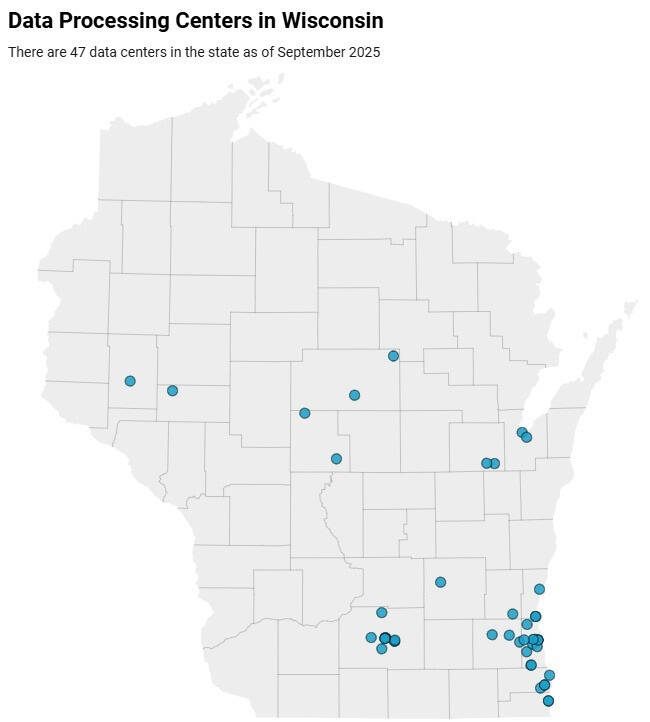
Here is a map of the centers in Wisconsin. One can see that there is an overwhelming amount of centers being built on Lake Michigan, outside of Milwaukee.
